What is SSP?
The nervous system is the foundation of how we orient ourselves to the world, how we take in information, relate to others, and participate in therapeutic work. When it becomes dysregulated and shifts into protective states like fight, flight, or freeze — often shaped by stress, sensory or neurodevelopmental challenges, pain, or trauma – even the most skilled therapeutic approaches struggle to land.
Supporting the nervous system first— gently, safely, and from within — creates the conditions where transformation becomes possible.
Listening therapies offer a direct path to support the nervous system’s return to regulation. By engaging the auditory pathway, they help ease defensive responses and create internal conditions of steadiness, presence, and connection. As the system settles, clients gain the capacity to engage more fully — opening space for more meaningful therapeutic progress
The Safe and Sound Protocol (SSP) is an evidence-based listening therapy. It is designed to shift the nervous system from defense to regulation, allowing you to feel safe and connect better with others.
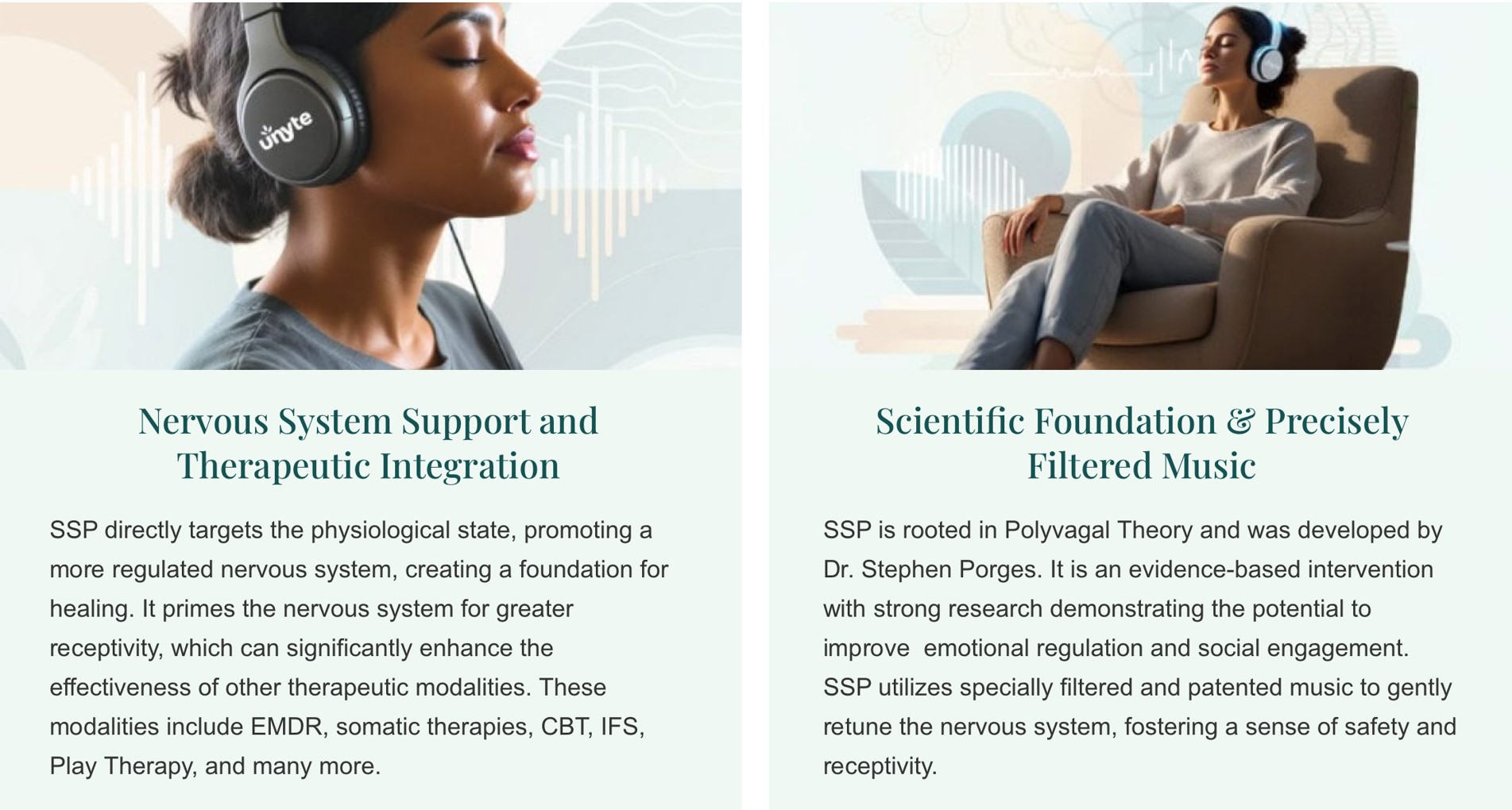
Tunes that Retune: The Solution
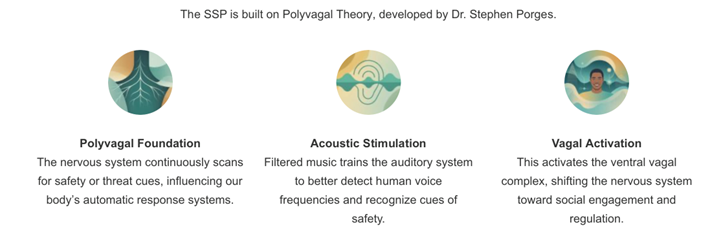
The SSP is built on Polyvagal Theory, developed by Dr. Stephen Porges.
When the nervous system is in defense mode, everyday sounds — including human voices — can be misinterpreted as threats. This auditory hypersensitivity makes communication and social engagement difficult, and can lead to isolation.
The SSP is designed to gently shift this auditory processing pattern. Its specially filtered music emphasizes the middle frequencies of the human voice. This is precisely the range our biology recognizes as reassuring and safe. By repeatedly exposing the nervous system to these “cues of safety,” SSP helps to retrain the ear and brain to interpret sounds more accurately, fostering a state of regulation, connection, and readiness for social engagement.
The Safe and Sound Protocol (SSP) is a practical application of Polyvagal Theory, which helps retune the nervous system to be more regulated and resilient to life’s challenges.
Information taken from www.unyte.com